• Build the business on real ground. Knowing how to move furniture is not the same as having a legal company. A mover can be strong, hardworking, and popular with customers and still be dangerously exposed if the legal structure, contracts, and insurance setup are weak.

    The legal side of the business protects you personally, protects the company financially, improves credibility, and keeps small mistakes from becoming catastrophic problems.

    Form a real entity and separate your finances. For many small owners, an LLC is a practical starting point because it creates a separate business entity without the complexity of a corporation. The exact structure should be chosen with a professional who understands taxes and liability, but the main point is simple: form a real business before you start acting like one.

    Once the entity exists, get an EIN, open a business bank account, and separate business money from personal money. Sloppy money handling creates tax trouble, weak records, and bad decision-making.

    Licensing and registration vary by market. Moving companies can be regulated at the city, county, state, and federal level. A labor-only operator may have one set of requirements. A local household-goods mover with trucks may have another. A company that crosses state lines enters a different compliance world entirely.

    Never assume that because another mover is doing something, it must be compliant. Verify business-license requirements, vehicle requirements, and any mover-specific registration in the jurisdictions where you operate.

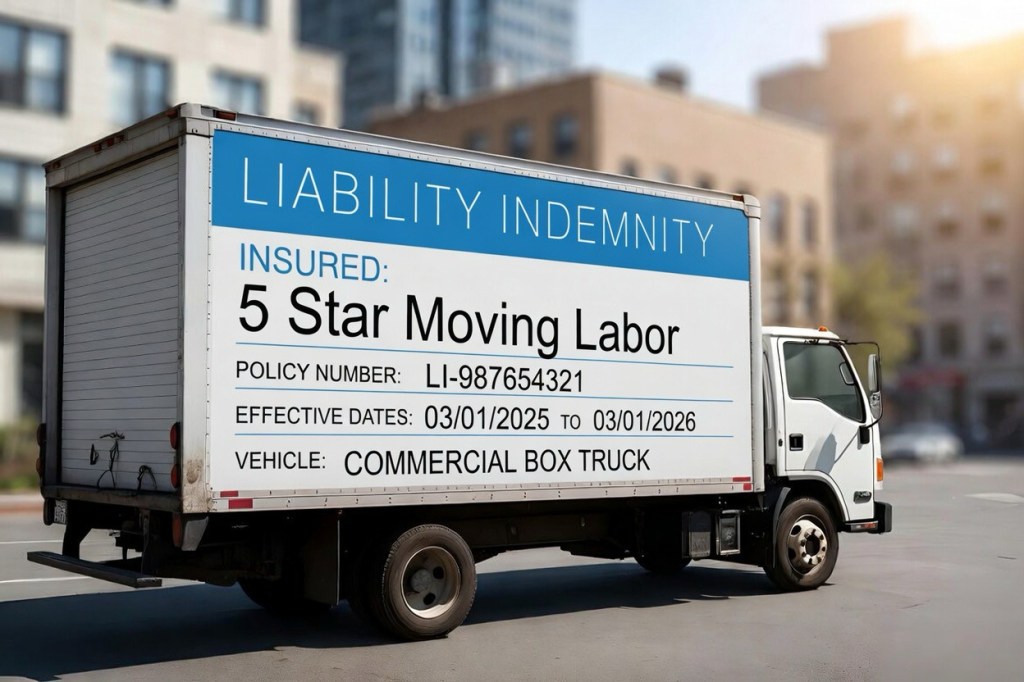
    Insurance is not optional. A moving company lives inside risk. General liability coverage, commercial auto coverage, customer-property or cargo-related protection, and workers’ compensation where required are not decorative extras. They are part of the operating foundation.

    The key is not merely having an insurance card. The key is understanding what your policies actually cover, what they exclude, and how claims should be handled. A broker who understands moving businesses is worth real money.

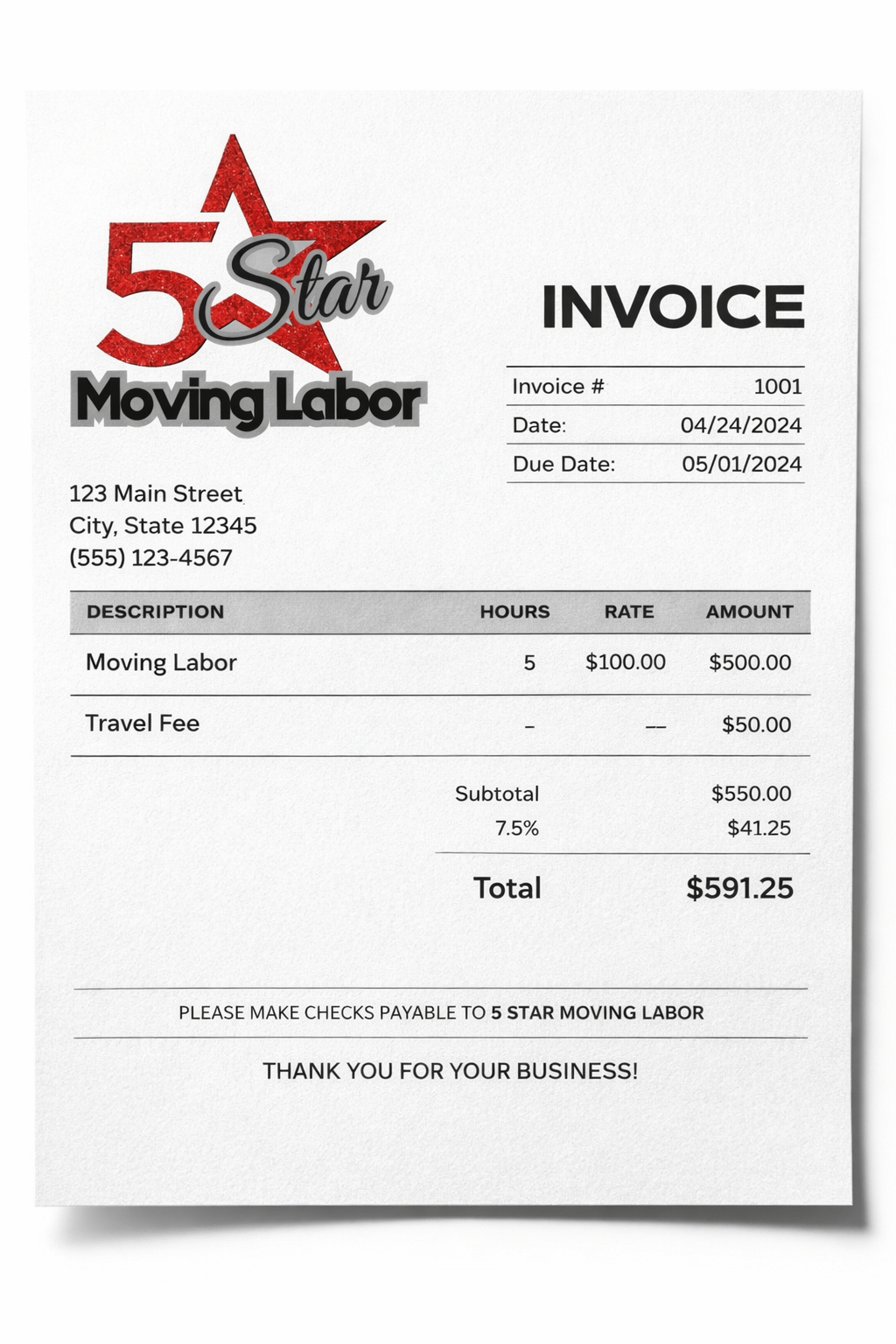
    Contracts and claims procedures matter. A handshake is not a system. You need written estimates, service terms, payment terms, cancellation terms, and claims language that fits your services and the law. Your paperwork should make clear what is included, what is excluded, and what happens when scope changes or something goes wrong.

    You also need a claims process before the first claim arrives. Calm procedure beats panic every time.

    Checklist: Legal Setup and Compliance

    ☐ Business entity formed and name verified.

    ☐ EIN and business bank account established.

    ☐ Bookkeeping process set up.

    ☐ Local and state licensing requirements verified.

    ☐ Commercial auto, liability, and property-related coverage reviewed.

    ☐ Worker classification and payroll rules understood.

    ☐ Estimate, service-agreement, and claims documents prepared.

    Get this foundation right before you book your first paid job and you’ll sleep better every single night you’re in business. Weak legal setup is one of the fastest ways new movers lose everything they worked for.

    Ready to build a real moving company the right way in 2026?

    This is just one piece of the system. Grab the complete 2026 edition of So You Want to Start a Moving Company — the full guide that already includes every worksheet, field checklist, sample form, and template you need.

    Click here to get the book now: https://a.co/d/03LsSVf0

    +
  • One phrase hides several businesses. Saying you want to start a moving company is like saying you want to open a food business. The category is too broad to make useful decisions. Local residential moving, labor-only help, long-distance work, office moves, packing services, specialty-item handling, and senior downsizing support all live under the same umbrella, but they operate very differently.

    Your business model determines your startup costs, the kind of insurance and licensing you may need, the kind of truck and labor you need, your average ticket size, and the amount of complexity you inherit on day one.

    For many first-time owners, local residential moving is the cleanest place to begin. The jobs are easier to understand, the routes are shorter, and the service is familiar to customers. This model also gives you a fast way to build reviews and referrals. Its downside is competition. Nearly every market has budget movers, side-job crews, established brands, and lead-platform bidders. That means your professionalism, response time, and communication must separate you from the crowd.

    Labor-only moving can be an excellent entry point because it avoids the immediate burden of buying or leasing a truck. Customers rent their own truck, container, or trailer and hire your crew for loading, unloading, in-home moves, rearranging, or storage work. The tradeoff is control. When the customer provides the vehicle or container, you inherit all the complications created by bad truck sizing, poor parking, weak planning, and unrealistic expectations. Even so, labor-only can be a smart stepping stone for a lean startup.

    Commercial and office work can be lucrative and can diversify your calendar. They often happen on weekdays or after hours and may involve repeat relationships. They also require tighter planning, better labeling, stronger leadership, and higher customer expectations around downtime and coordination. Commercial moving is usually best added after the company already handles residential work cleanly.

    Specialty, packing, and niche services (packing, unpacking, senior moves, clean-outs, junk removal add-ons, and specialty-item handling) can all increase revenue per customer. They can also distinguish the brand in a crowded market. These services tend to succeed when the core business is already stable enough to support them.

    The right starting model is not the one that sounds impressive. It is the one you can run well with your actual money, your actual experience, and your actual market.

    Case Study: The Senior Move That Changed the Company’s Direction

    Rachel thought she was building a standard local moving company until a family hired her to help an elderly mother move into assisted living. The furniture itself was manageable. The emotional environment was the real challenge. The daughter cared deeply about patience, placement, calm communication, and whether the crew would make a painful day easier instead of harder.

    Rachel’s crew slowed when needed, placed furniture carefully, and handled the move like a human transition instead of a speed contest. That one job led to another referral, then another, and eventually to a reliable stream of downsizing and senior-transition work from local professionals who had heard her company was careful, respectful, and organized.

    Sometimes the most profitable service lane is not the loudest one. A niche can emerge from the kind of work your company is naturally best at delivering.

    Checklist: Choosing the Right Business Model

    ☐ I have identified the first service lane I want to enter.

    ☐ I know whether I am starting with transportation, labor-only work, or both.

    ☐ I have considered local demand instead of guessing.

    ☐ I understand the complexity and risk level of the model I chose.

    ☐ My chosen model matches my current capital and experience.

    Once you’ve locked in the right model, the next step is getting legally bulletproof — because even the strongest crew and the best pricing can’t protect you from the wrong insurance or missing licenses.

    Ready to build a real moving company the right way in 2026?

    This is just one piece of the system. Grab the complete 2026 edition of So You Want to Start a Moving Company — the full guide that already includes every worksheet, field checklist, sample form, and template you need.

    Click here to get the book now: https://a.co/d/0cIpTxOf

    (Next post coming soon: “Legal Setup, Licenses, and Insurance for a New Moving Company: What Most Owners Miss in 2026”)

    +
  • From the outside, a moving company can look almost too simple. Get a truck, find a few strong people, answer the phone, move furniture, get paid, repeat. That idea lasts right up until the first customer underestimates the scope of the job, the first helper calls out, the first dresser will not clear the stairwell, or the first client says, “It’s just a few boxes,” and opens the door to what turns out to be a small private warehouse.

    Moving is simple in theory and demanding in practice. It is physical work, but it is also customer service, logistics, sales, scheduling, conflict management, risk control, equipment management, and reputation management. You are not just carrying belongings. You are carrying expectations, timelines, and sometimes the emotional weight of a major life change.

    That is exactly why the business can be so valuable — and why it remains one of the strongest small businesses you can start in 2026.

    People always move. They move when life is exciting, when life is painful, when money is tight, when opportunity appears, when families grow, when families split, when leases end, when homes sell, and when fresh starts become unavoidable. As long as people keep changing jobs, homes, and circumstances, there will be demand for moving help. Demand, however, does not guarantee profit. Many owners fail because they confuse activity with health. They stay busy while underpricing jobs, absorbing avoidable losses, tolerating weak labor, skipping systems, and letting small mistakes turn into expensive habits.

    The moving business exists at the intersection of necessity and stress. People may postpone many purchases, but when a lease ends, a house closes, a family situation changes, or a job transfer hits the calendar, the need to move becomes immediate. That gives the industry unusual durability compared with trend-driven businesses.

    People move for every reason imaginable: growth, downsizing, divorce, retirement, military relocation, school, eviction, probate, renovation, storage overflow, or simple exhaustion with where they are. Each of those life events creates work, and many of them create work urgently.

    The barrier to entry is low enough to start and high enough to matter. A local moving company can be launched more leanly than many other businesses. You do not need a storefront on day one, a giant payroll, or an enormous equipment budget. In some models you do not even need a truck at the beginning. That accessibility is part of the appeal.

    At the same time, the business is harder to run well than it looks. Good operators price accurately, communicate clearly, protect homes and belongings, keep labor under control, and survive the slow weeks and surprise expenses. Many people enter the industry cheaply and then discover that staying in business requires far more discipline than getting started.

    The income can be real, but only if the math is real. A moving company can generate strong revenue, but revenue alone is not the prize. Plenty of owners boast about how many jobs they completed while quietly losing money through weak pricing, fuel waste, labor inefficiency, poor scheduling, charge disputes, and damage claims.

    The difference between a healthy mover and a worn-out mover is rarely effort alone. It is usually structure. The profitable company understands its costs, protects margin, and refuses to confuse hard work with good business.

    Reputation is one of the main assets. Customers see nearly everything in this business. They see whether your crew is prepared, whether the truck is clean, whether floors and doorways are protected, whether communication is clear, and how the company behaves when something unexpected happens. That visibility makes reputation unusually powerful.

    A single move can generate repeat work, realtor referrals, apartment referrals, storage referrals, and online reviews that continue bringing leads. It can also generate the opposite. That is why professionalism is not cosmetic in moving. It is operational.

    It can start small and still grow into something serious. One of the best qualities of the industry is that growth can happen in layers. A company can begin with a tight local service area, a rented truck or one used truck, and a small crew. It can learn pricing, workflow, and customer management before adding capacity.

    That small beginning is not a weakness. It is often the smartest way to build a company with actual bones instead of one held together by adrenaline and discount pricing.

    The work is not for everyone. Moving is demanding. It is hard on the body, hard on schedules, hard on vehicles, and sometimes hard on patience. The owner is often responsible for solving problems under pressure while customers are watching and the clock is running. People who do well in the business tend to be practical, calm, resilient, and willing to build systems instead of relying only on grit.

    For the right person, however, that challenge is exactly what makes the business attractive. There is room to build a real company by doing ordinary things with uncommon discipline.

    Checklist: Are You Ready to Start a Moving Company?

    ☐ I understand that moving is a physical service business, not easy money.

    ☐ I know what type of moving company I want to build first.

    ☐ I have a realistic startup budget or a lean startup plan.

    ☐ I am prepared to learn pricing, paperwork, and operations, not only the labor side.

    ☐ I understand that reputation will shape growth as much as marketing.

    ☐ I am willing to start small and build correctly.

    This is not a fantasy version of the business. These pages are meant to be practical. We will cover choosing a business model, handling legal setup, getting insured, buying the right equipment, pricing correctly, finding customers, hiring and managing crews, running the move, dealing with claims, building systems, and growing without scaling chaos.

    The goal is not to make the business sound easy. The goal is to make it understandable. A moving company can start lean and still become real. It can begin with one truck, one tight service area, one disciplined operator, and a handful of jobs done the right way. Built correctly, it can grow into a durable local brand and a genuine path to ownership.

    If you are willing to respect the work, respect the numbers, and respect the customer experience, this business can become much more than a job. It can become something solid.

    Ready to build a real moving company the right way in 2026?

    This is just the beginning. Grab the complete 2026 edition of So You Want to Start a Moving Company — the full guide that already includes every worksheet, field checklist, sample form, and template you need.

    Click here to get the book now: https://a.co/d/0j1ccJUa

    (Next post coming soon: “How to Choose the Right Business Model for Your Moving Company — Local, Labor-Only, or Niche?”)

    +